Hungary Porto Stamps: The Complete Collector's Guide
Discover the fascinating world of Hungary postal history through its unique 'Porto' stamps. This guide is your gateway to understanding, identifying, and collecting these specialized overprints used to collect postage fees for over a century.
For philatelists, Hungary stamps with P, T, or PORTO overprints represent more than just postage due; they are tangible pieces of administrative history, reflecting the evolution of the postal system from the Austro-Hungary Empire through the 20th century.
Understanding P, T, and PORTO Overprints
Introduction: What Are Porto Overprints?
Hungary stamps bearing the overprints P, T, or PORTO are a fascinating and specialized area of philately. These are not regular postage stamps. They are "Porto Due" stamps, officially overprinted to convert regular stamps into instruments for collecting postage fees from the recipient.
- P stands for "Portó" (Porto, postage due).
- T stands for "Tartozék" (Debt, amount due).
- PORTO or P. PORTO are full-text variants.
Historical Context and Postal Use
The system of porto stamps is a direct legacy of the efficient Austro-Hungary postal administration. After the Compromise of 1867, Hungary operated its own post within the Dual Monarchy, and this method for collecting fees became standardized. Imagine a merchant in Budapest receiving an invoice from Vienna with insufficient postage - the familiar 'P' stamp on the envelope was the bill he had to settle.
Their use persisted through turbulent times: on the stamps of the Kingdom, during the short-lived Hungary Soviet Republic (1919), and well into the communist era. This makes them a unique collecting thread through vastly different political periods.
General worldwide catalogs like Michel often give these stamps just a single line. This is because the true complexity lies in the combination of two elements:
1: The Base Stamp:
Which regular Hungary issue was overprinted? (e.g., the "Cornflower" definitive series, portraits of Franz Josef, Charles IV, etc.). This determines the period.
2: The Overprint Type:
This is where the specialization begins:
- Letter Design: Font, size, and style of the "P", "T", or "PORTO".
- Color: Most commonly black or red, but other colors exist.
- Layout and Direction: Horizontal, vertical, diagonal, or framed within bars, circles, or other ornaments.
- Printing Method: Typographed, handstamped, etc.
For the collector
While daunting at first, collecting Hungary Porto overprints is a deeply rewarding puzzle. The key is to start by focusing on one specific area. For example, begin by seeking all variants of the simple "P" overprint on the common "Korenbloem" (Cornflower) definitive series. This trains your eye to spot differences in font, ink saturation, and alignment.
Unlike regular stamps, the condition of the overprint itself is often more critical than the condition of the base stamp. A clear, complete, and centered "PORTO" is what gives the stamp its philatelic value.
A Visual Guide to the Main Overprint Types
Below is a reference table showcasing the primary designs you will encounter.
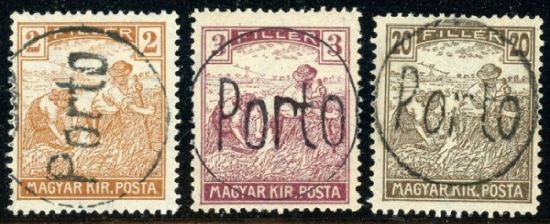
Simple "Porto in circle" Overprint
The most common type. Variations exist in font weight (bold, thin) and size. Often found in black or red ink.
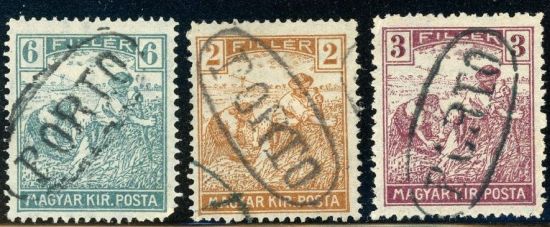
"Porto" within a Oval
A more formalized version. The circle can be single or double-lined. The position of the 'P' within the circle can vary.
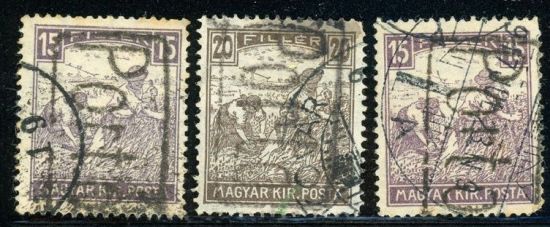
Overprint "Porto" within a Square
The position of the 'Porto' within the circle can vary.
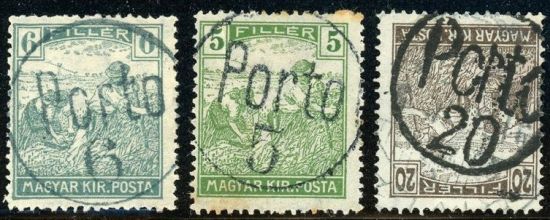
Overprint "Porto with number" within a Circle
-
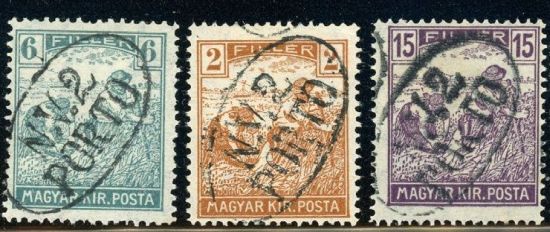
Overprint "NV.2 with Porto" within a Oval
The position of the 'P' within the circle can vary.
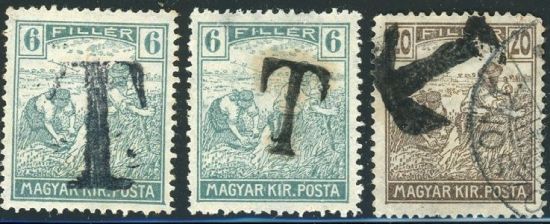
Overprint "T" overprint
The position of the 'P' within the circle can vary.
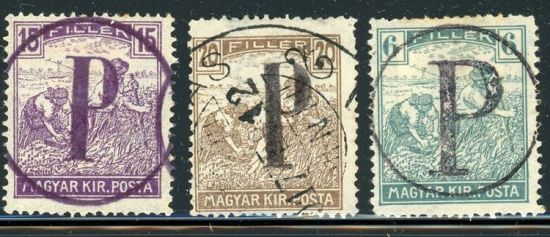
Overprint "P" in circle overprint
The position of the 'P' within the circle can vary.
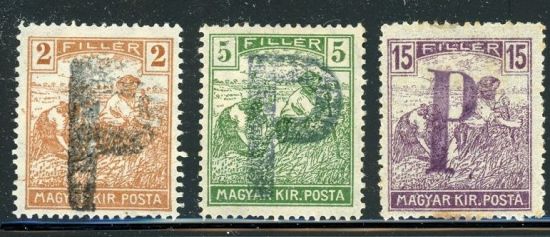
Overprint "P" overprint
The position of the 'P' can vary.
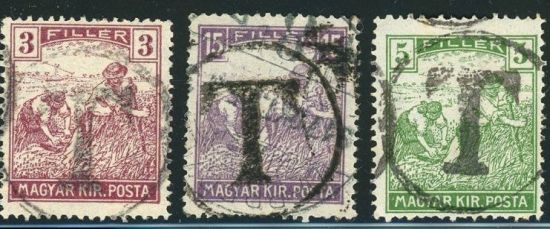
Overprint "T" in circle overprint
The position of the 'T' can vary.
Hungary Porto Stamps in My Collectio
Below are selected pages from my personal collection, showcasing the variety of Porto overprints on different Hungary definitives and commemoratives.

Hungary PORTO overprint - example 1
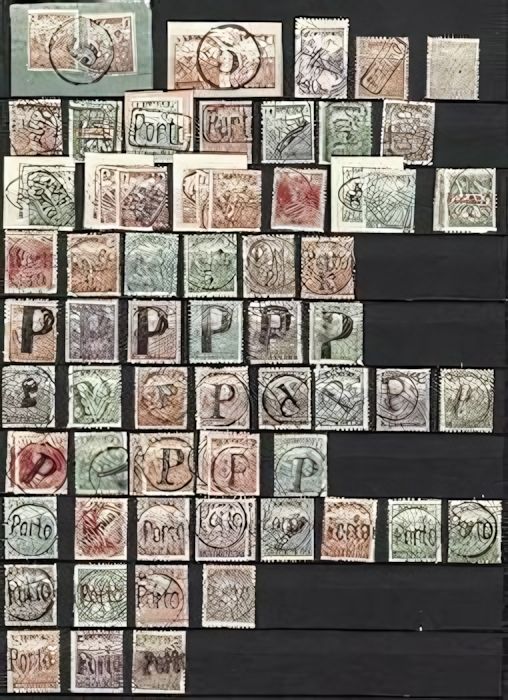
Hungary PORTO overprint - example 2
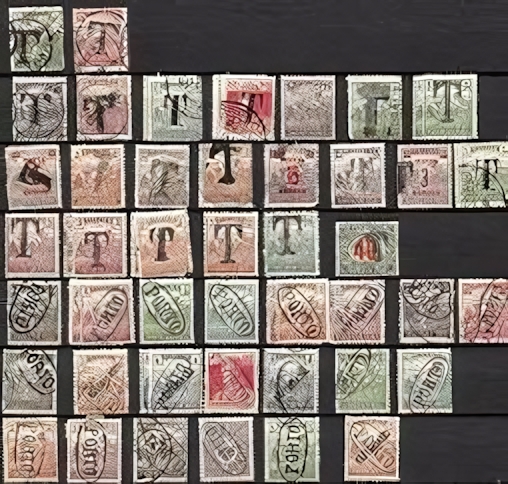
Hungary PORTO overprint - example 3
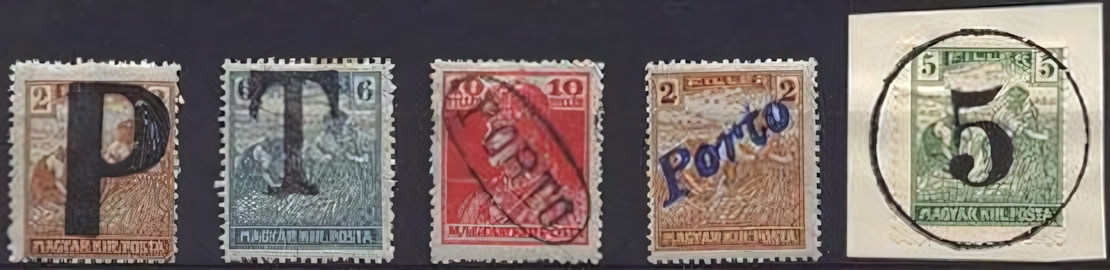
Hungary PORTO overprint - example 4